Access Insights
Case Study: Virtual Lex
Every organization has an origin story. Ours is a case study. The people who became Access Insights spent decades honing their craft at Intel. We left it at different times for different reasons, but kept in touch. Many of us knew Lex Frieden, chief architect of the Americans with Disabilities Act. In December 2024, Lex approached us and asked for help being present in rooms and events he could not travel to due to limitations of his disability. In the group that would eventually become Access Insights, he found a team with the right skills, with a shared passion for accessibility, and the time to collectively address his challenge. Becky Chierichetti led the initiative with a live-controlled digital twin of Lex. Pete Denman and Richard Beckwith constructed a robotic head to house the digital version, and Marco Beltman enabled immersive, high-fidelity presence with binaural audio. From the very first call, Lex was a codesigner in all aspects of the build.
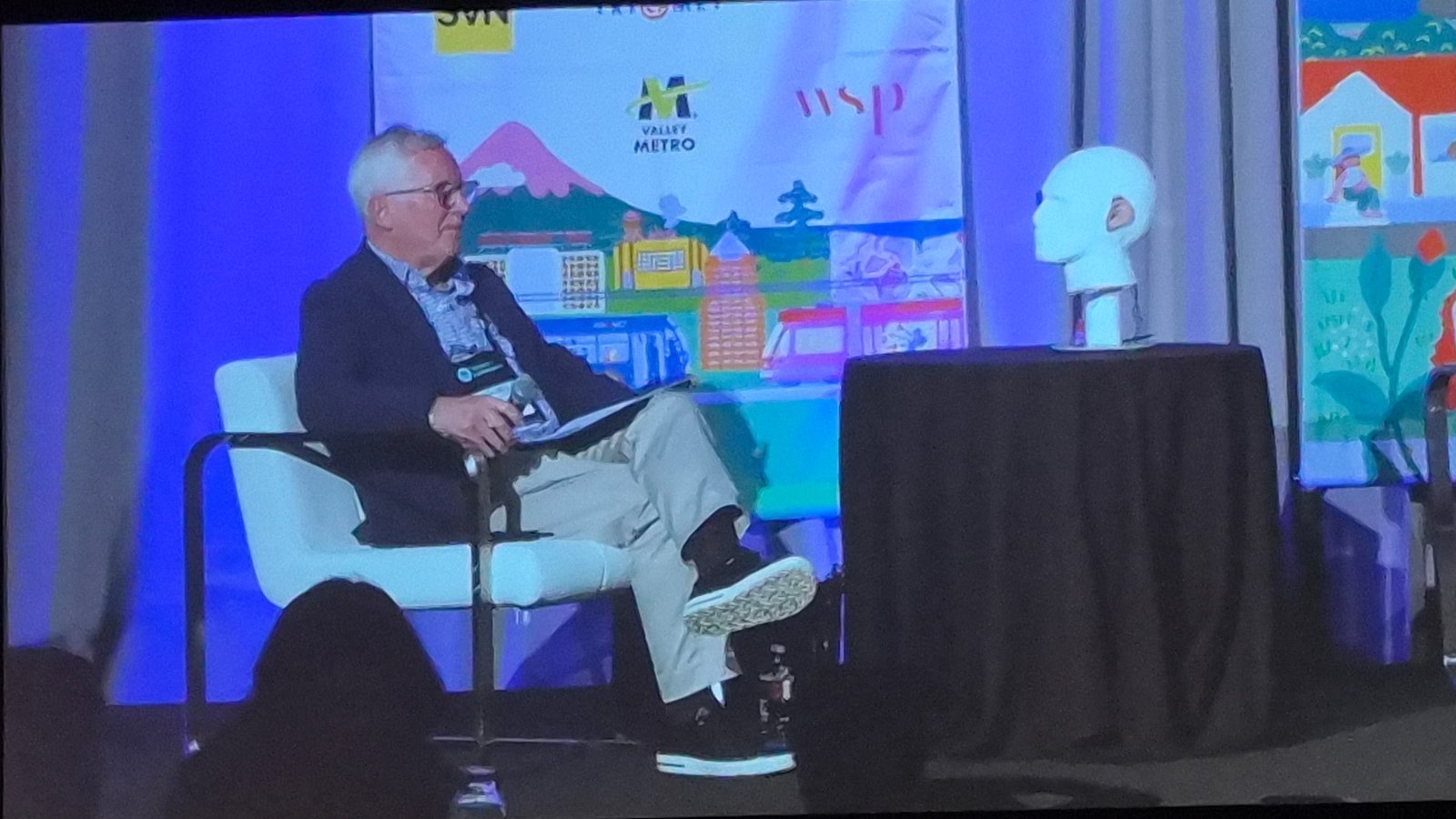
"Imagine and help me implement some creative telepresence demonstration."
- Role
Team build, with Lex as codesigner throughout
- Organization
The group that became Access Insights
- Timeline
December 2024 to present
- Legacy
The project that led to Access Insights, named January 2026
The challenge
The expertise could not stop. The travel had to.
Lex Frieden has spent five decades shaping disability policy, from architecting the Americans with Disabilities Act to advising governments and universities. The demand for that expertise keeps growing: lectures, conferences, testimony, classrooms. What stopped was his ability to be there in person.
In December 2024 he put the problem to people he knew and trusted: designers, researchers, and engineers who had spent their careers inside Intel building for accessibility. In a post-lockdown world, most people are very familiar with remote collaboration modalities such as video calls. Lex wanted something more impactful; he wanted a solution that would let a room experience him in a way that was more tangible and present than 2D video: his face, his timing, his presence, even when his body could not make the trip. A flat video call was the bar to clear, not the answer.
Approach and build
The user set the brief and the bar
This project began as a request from the person who would live with the result, put to a team that had just stepped out of long corporate careers and into the freedom to choose what mattered. Lex was an active codesigner the whole way. The team considered both physical embodiment and a digital twin. Three threads ran in parallel:
• A digital twin of Lex to use as an avatar in video calls
• A robot head to eventually house the avatar and act as a conversational target
• A holographic display to add an additional dimension of reality to the digital avatar.
Every decision came back to one test: does the room experience Lex as if he were physically present, and does Lex experience the room as if he were there in person?
An avatar, a head, and open tools
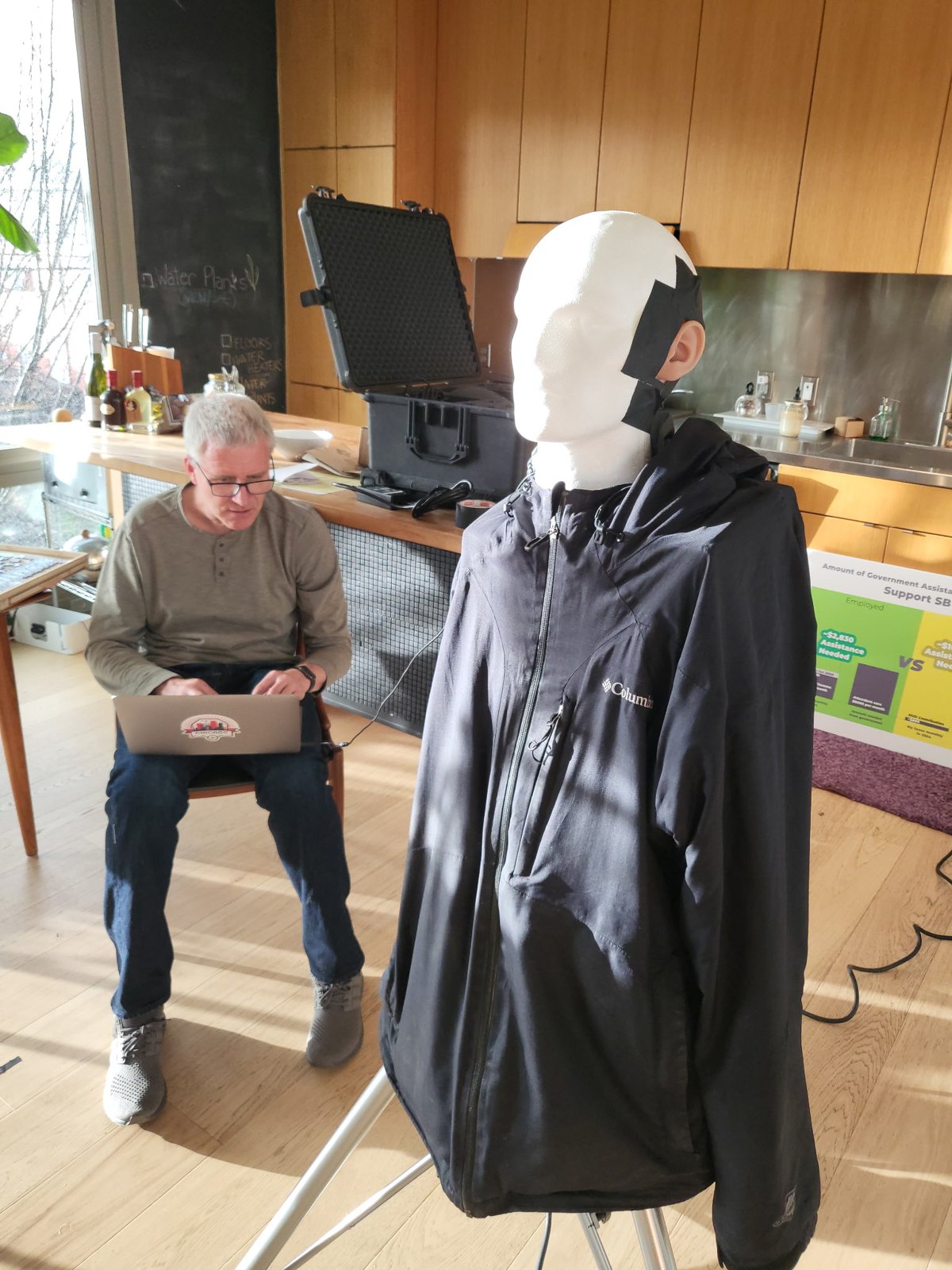
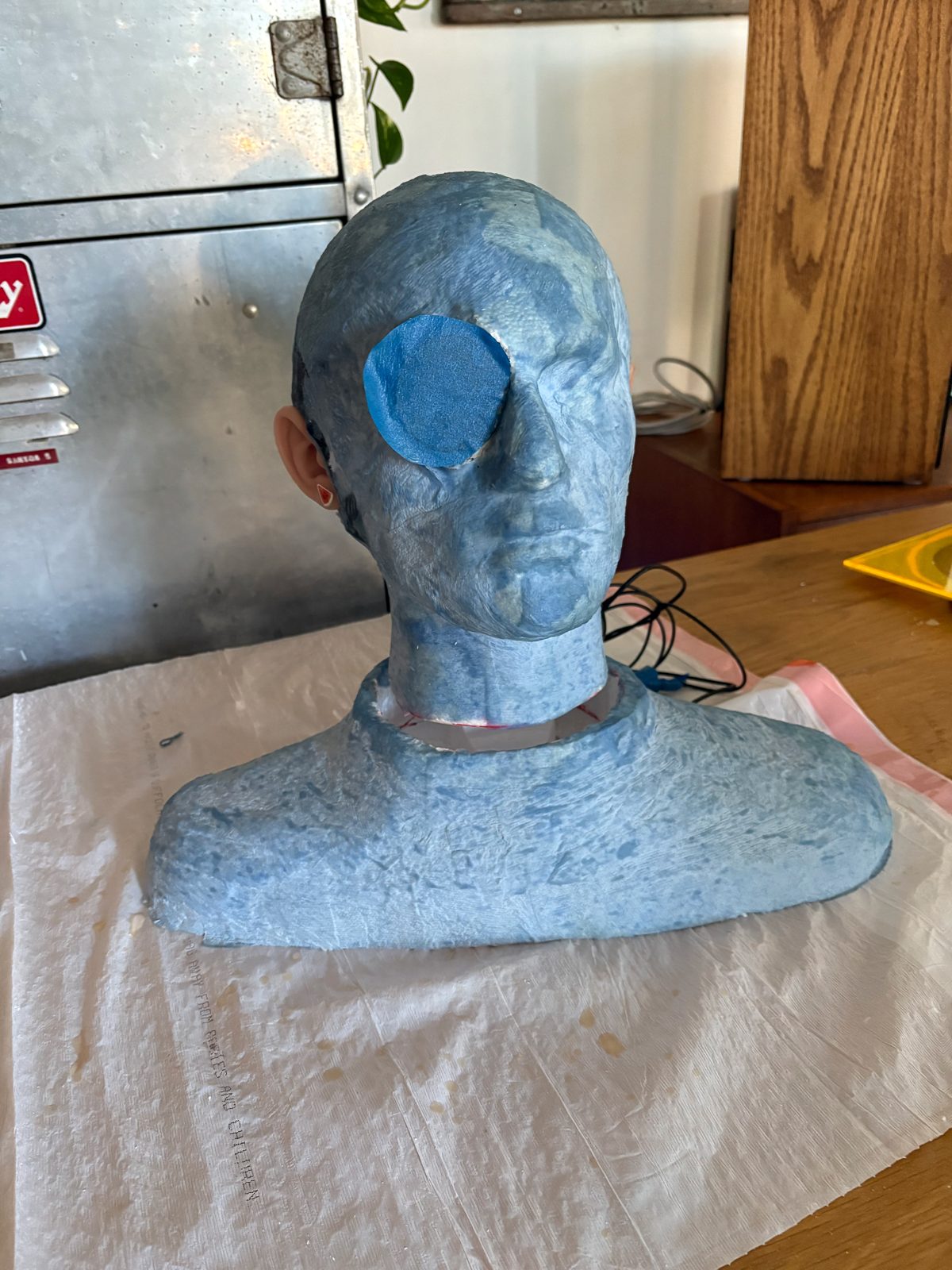
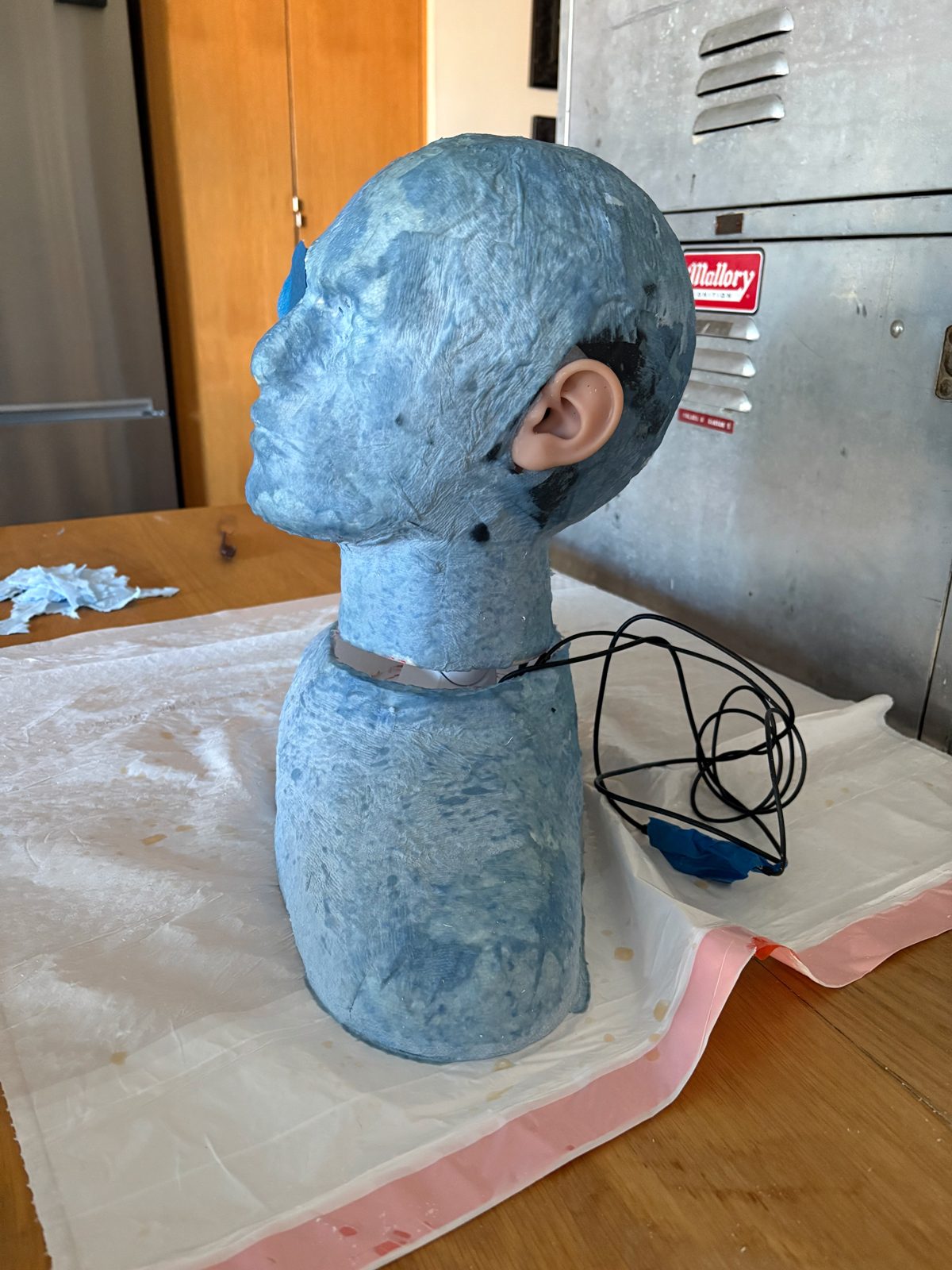
Becky Chierichetti led the design and building of the avatar: a lip synced, animated likeness built with Character Creator 4, Blender, Unity, iFacialMocap, and VSeeFace. It is controlled by realtime video of Lex and functions as a realistic stand-in when Lex was unable to share video of himself. The pipeline was designed to be reproducible with minimal expertise and budget so it could be recreated by anyone. Pete Denman and Richard Beckwith built the physical structure to house the avatar: a robot head that can pivot on two axes and houses input for audio and video. Marco Beltman, our acoustics researcher, was heavily involved in the binaural audio: microphones seated in realistic ears allowed Lex to hear the room the way a person standing there would, while the head turns toward whoever is speaking.
The use case scenario
One lecture, given from his bed. A room, experienced from inside it.
The people below other than Lex are composites; the workflow is the real one. This is what a session looks like when the system does its job.
- T minus 30
Setup
A caregiver launches the pipeline: capture app, avatar engine, streaming layer, each in the right order.
- T minus 5
Going live
The avatar comes up on the venue screen: Lex's likeness, animated and lip synced from his actual face and voice in real time. Not a photo beside a phone call. A visible, social presence that holds the room's eyes the way a speaker does.
- Minute 1
Hearing the room
Through binaural microphones seated in the prototype's ears, Lex hears the room in three dimensions: the question from the left, the laugh from the back. Presence is not only being seen. It is knowing where everyone is.
- Minute 20
Turning toward a question
A hand goes up to his right. The robot head turns toward the questioner, and the room reads what bodies read: he is looking at me, he is listening. The gesture costs a motor and a bearing. What it buys is the difference between watching a screen and being with a person.
- Minute 40
The room forgets
Somewhere mid lecture the novelty wears off and the audience is simply in a class taught by Lex Frieden. That is the design goal stated in one line: the technology disappears and the person remains.
- After
The handshake line
Students linger the way they do for a speaker they liked, asking follow ups. Lex takes them one by one, turning to each. The session ends when he ends it, not when a stream drops.
- Next
One click, no coaching
Lex's own roadmap for the system: an app that sets up and runs the whole pipeline in one click, so presence does not depend on which caregiver is on shift. The user is still setting the brief. That is the point.
- Always
What no feature replaces
The avatar has no opinions and the head has no expertise. Every word is Lex's, live. The system exists to carry his presence, never to simulate it, and the difference is the whole ethics of the project.
Presence runs both ways
From Lex
- live face capture
- his voice, in real time
- expression and timing
The pipeline
- Character Creator 4
- Blender
- Unity
- iFacialMocap
- VSeeFace
- mostly free and open
In the room
- lip synced avatar on screen
- robot head that turns
- camera view back to Lex
- binaural sound back to Lex
Presence, not simulation
The system carries a live person into a room and carries the room back to him. Nothing speaks for Lex, predicts Lex, or stands in for Lex.
The person decides. Always.
- his words, live, never generated
- his schedule, his stamina, his call
- his likeness, used only by him
Drawn from the team's build accounts. The avatar and the robot head are two embodiments of the same principle: the room should experience the person, and the person should experience the room.
The outcome
It worked well enough that people forgot.
In October 2025 the robotic interface made its public debut at a transit conference. It functioned as Lex's eyes and ears in front of the audience, and live control allowed him to gesture and look at the audience.
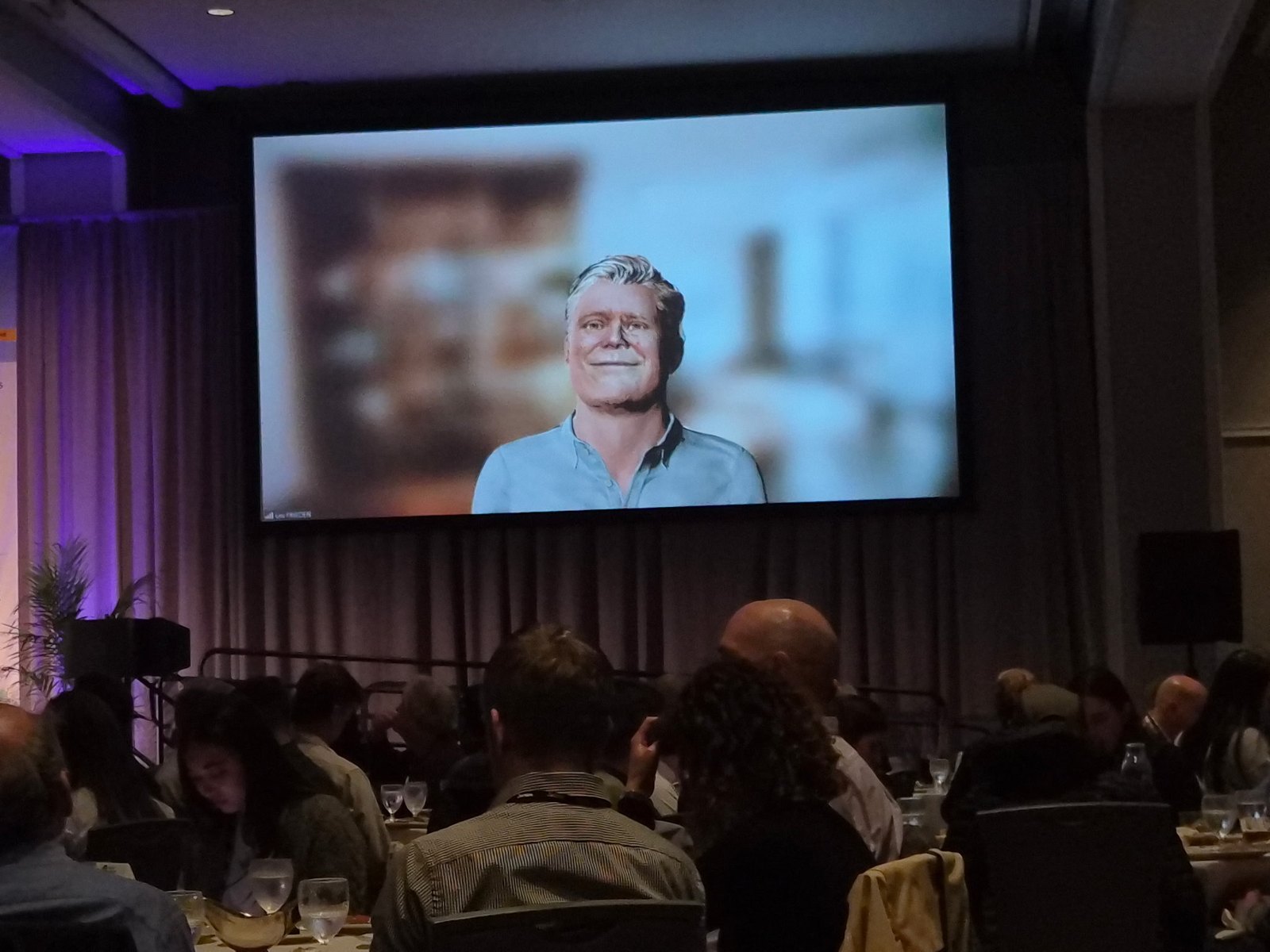
More uses followed, in lecture halls and meetings, each one a room that treated the avatar as the man himself.
Then the favor for a friend became something nobody had planned: an organization. The careers that trained this team had ended at different times, for different reasons, but the work of building Virtual Lex proved that the team itself was the thing worth keeping. The group that gathered around Lex's December 2024 ask kept working together, and by January 2026 it had a name: Access Insights. Virtual Lex is not a project the company took on. It is where the company comes from, and it runs the same arc our ACAT (Assistive Context Aware Toolkit) and Connected Wheelchair case studies trace through our corporate years: begin with one person's lived reality, cocreate, build, validate in the real world.
- Lex's ask, December 2024
- Avatar and robot head, 2025
- Public debut, October 2025
- Access Insights, January 2026
- One click app, next
In June 2026 Lex presented the work with Pete Denman and Darryl Adams at the AADMD (American Academy of Developmental Medicine and Dentistry) One Voice session on inclusive technology, avatars, and the future of accessibility. His direction after: package the program so others can find it. The pipeline is already mostly free and open tools. What remains is making it effortless.
What this case proves
The end of one journey. The origin of this one.
Virtual Lex is the hinge between two chapters. The skills came from decades inside Intel, the same years our other case studies document. The mission came from a friend who needed to be in rooms his body could not reach. When the two met, the arc Access Insights now runs deliberately ran itself: begin with lived experience, a disabled expert defining his own requirements, cocreate, build, and validate in real rooms with real audiences.
It kept a founding voice of the disability rights movement teaching, testifying, and advising, and it founded this organization along the way. The next step, one click setup, is already specified by the user it serves. That is what disabled led development looks like, and it is how we intend to keep working.
Fund a study, co-develop a prototype, or validate an emerging technology.
hello@accessinsights.net
Sources: the team's build accounts from Becky Chierichetti and Lex Frieden, the project email record, the site's Proto-Lab description, and the prototype photographs.